Introduction
If your Toyota Land Cruiser 100 or Lexus LX470 door lock stops responding, makes clicking or grinding noises, or works only sometimes, the door lock actuator is a likely culprit. The plastic gears can wear out and the small electric motor can weaken after decades of use, especially on these high-mileage vehicles. If one door has stopped locking or unlocking reliably, replacing the actuator is usually the right fix—and it is a mechanical/electrical repair, not a key-programming job. This guide covers the complete Toyota Land Cruiser door lock actuator replacement process, from diagnosing the symptoms to installing a new actuator step by step.
Common Symptoms of a Failing Door Lock Actuator
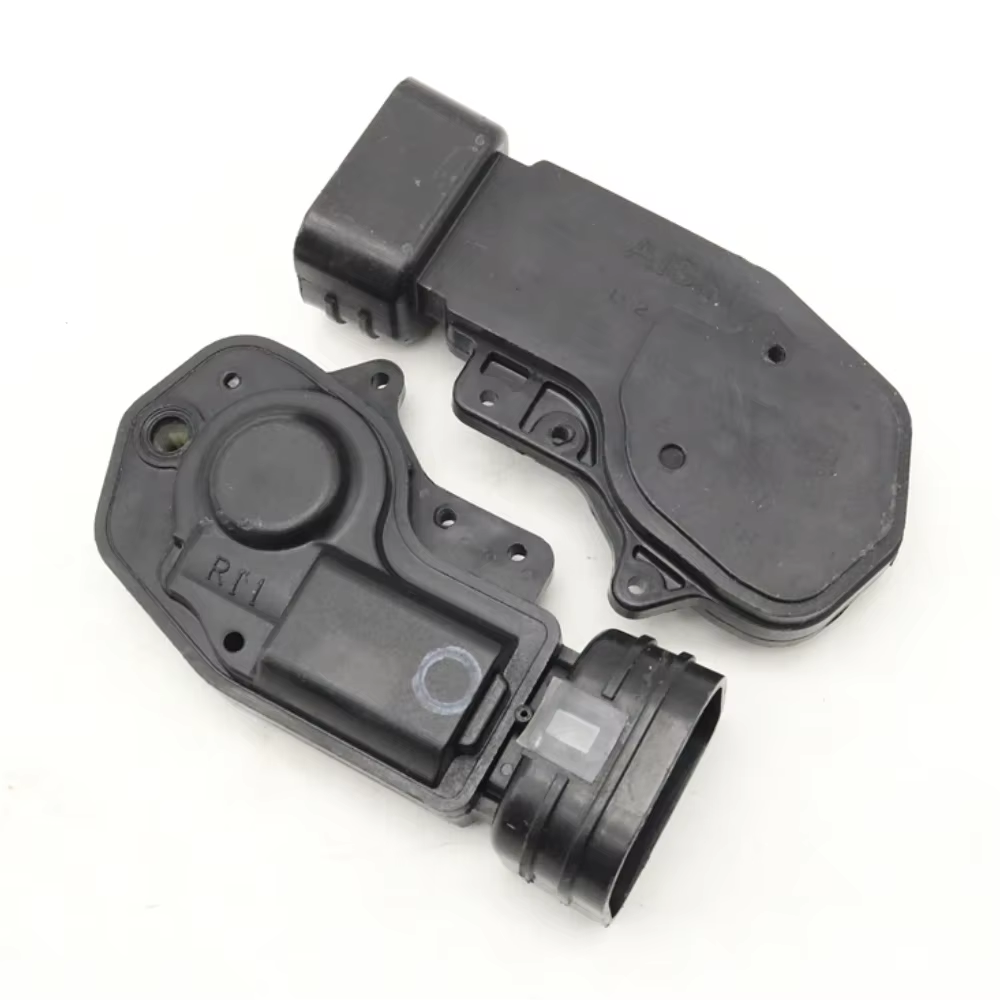
The door lock actuator is the small electric motor-and-gear mechanism that physically moves the door lock when you press the remote, door switch, or central locking button.
On a Toyota Land Cruiser 100 or Lexus LX470, a failing actuator can produce several recognizable symptoms:
Door Won’t Lock or Unlock
The most obvious symptom is that one door no longer responds when you use the key fob or interior lock switch.
For example, the other three doors may lock normally while the driver’s door remains unlocked. This strongly suggests a problem isolated to that door rather than the entire central locking system.
Clicking or Grinding Noise
You may hear a clicking, grinding, buzzing, or weak motor sound from inside the door.
This can happen when the actuator’s internal plastic gears have worn down. The electric motor may still operate, but the damaged gears can no longer transfer the motor’s movement properly to the lock mechanism.
One Door Locks but Others Don’t Respond
If only one door has stopped working while the rest of the vehicle’s central locking system works normally, the individual actuator is a prime suspect.
If none of the doors respond, however, you should investigate the fuse, wiring, switches, receiver, or central locking system before replacing an actuator.
Locking Motor Works Intermittently
An actuator may work normally one day and fail the next.
You might find that locking the vehicle several times eventually makes the problem disappear temporarily. This is another common sign of an aging motor or worn internal gears.
Common on High-Mileage LC100 and LX470
The Toyota Land Cruiser 100 and Lexus LX470 were built for durability, but even durable vehicles have components that eventually wear out.
These vehicles are now roughly 18–27 years old, depending on model year. At this age, multiple door lock actuators failing around the same time is not unusual.
Why Does the Door Lock Actuator Fail?
There are two major reasons.
Plastic Gears Wear Out
Inside the actuator is a small gear mechanism. After thousands of locking and unlocking cycles, the plastic gears can develop worn or damaged teeth.
Once the gears become badly worn, the motor may spin without moving the lock mechanism correctly.
The Electric Motor Wears Out
The actuator also contains a small electric motor. After many years of operation, the motor can become weak or eventually burn out.
Age, heat, repeated use, and normal mechanical wear all contribute to actuator failure.
This is why a Land Cruiser or LX470 with one failed actuator may eventually develop problems with another door.
Door Lock Actuator Replacement Cost
The cost depends heavily on whether you do the work yourself or pay a repair shop.
| Option | Parts Cost | Labor Cost | Total Cost |
|---|---|---|---|
| DIY (single actuator) | $15–35 | $0 | $15–35 |
| DIY (full set of 4) | $50–120 | $0 | $50–120 |
| Independent Shop | $80–150 per door | $100–150 per door | $180–300 per door |
| Dealership | $150–250 per door | $200–350 per door | $350–600 per door |
The potential savings are significant.
Replacing one actuator yourself could cost approximately $15–35, compared with up to $600 per door at a dealership.
If all four actuators eventually need replacement, a DIY full set may cost around $50–120, while dealership repairs could potentially reach $1,400–$2,400.
Actual prices vary depending on the vehicle, parts supplier, location, and labor rate.
Why Choose a Full 4-Piece Set Instead of a Single Actuator?
If your LC100 or LX470 is already 18–27 years old, replacing only one actuator is not always the most economical long-term approach.
Other Actuators Have Similar Wear
If one actuator has failed because of age, the other original actuators have experienced many of the same locking cycles.
That does not mean all four will fail immediately, but they may be approaching the same stage of wear.
Replacing them together can save you from opening another door and repeating the repair later.
Matching Actuator Applications
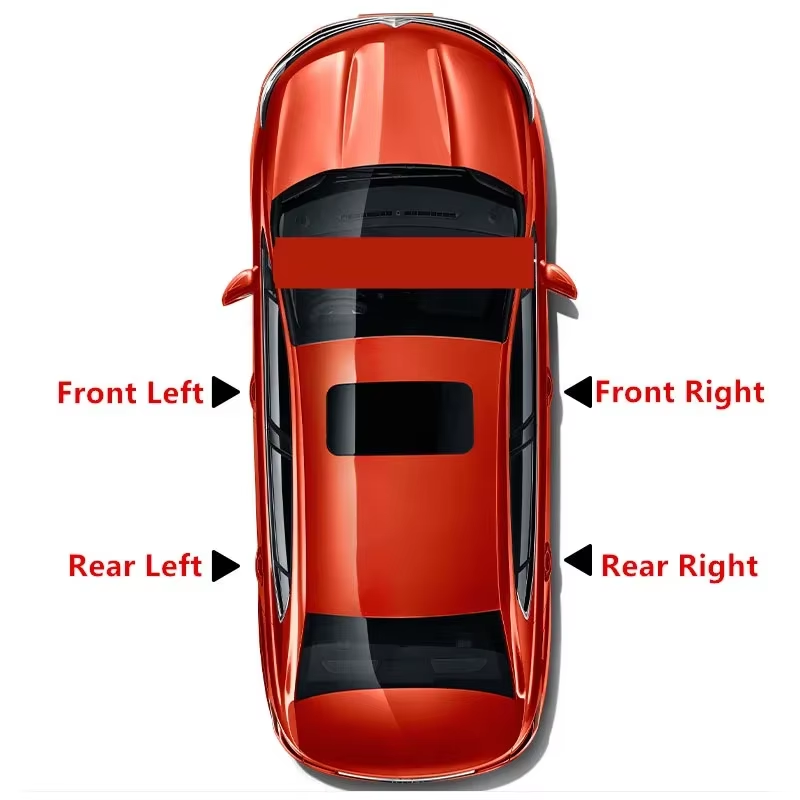
For compatible applications, the actuator configuration can be mirrored between sides:
- Front Left = Rear Right — same basic actuator application, mirrored installation
- Front Right = Rear Left — same basic actuator application, mirrored installation
Always confirm the exact application before ordering because door configuration and model year can affect compatibility.
Save Money on Future Repairs
Buying a complete four-piece set can be less expensive than buying individual actuators one at a time.
You also get all the replacement parts at once, which can be useful if you plan to refresh the central locking system on an older LC100 or LX470.
Many aftermarket replacement actuators use a plastic + metal construction and are manufactured under ISO9001-certified quality systems.
Remember that ISO9001 certification refers to the manufacturer’s quality management system; it does not automatically guarantee that every individual actuator will last as long as an original Toyota/Lexus component.
Tools Needed
You generally do not need specialized equipment for this repair.
- Phillips screwdriver
- Trim removal tool
- Socket wrench set
- Needle-nose pliers
- Flashlight
A small container for keeping screws and clips is also useful.
Step-by-Step Door Lock Actuator Installation Guide
The exact trim clips, fasteners, and actuator mounting arrangement can vary slightly by model year and door, so use the steps below as a general LC100/LX470 procedure.
Step 1: Prepare the Vehicle
Park the Land Cruiser or LX470 on a level surface and switch off the ignition.
For additional electrical safety, disconnect the negative battery terminal before working on electrical components inside the door.
Keep the window fully raised so you have better access to the door mechanism.
Step 2: Remove the Door Panel
Use a trim removal tool to carefully release the door panel clips.
Remove the visible screws and bolts around the door handle, armrest, and other mounting locations.
Do not pull the panel aggressively. Once the clips are released, lift the panel carefully and disconnect any electrical connectors attached to the door panel.
Set the panel somewhere safe.
Step 3: Locate the Door Lock Actuator
With the door panel removed, locate the door lock actuator attached to the door locking mechanism.
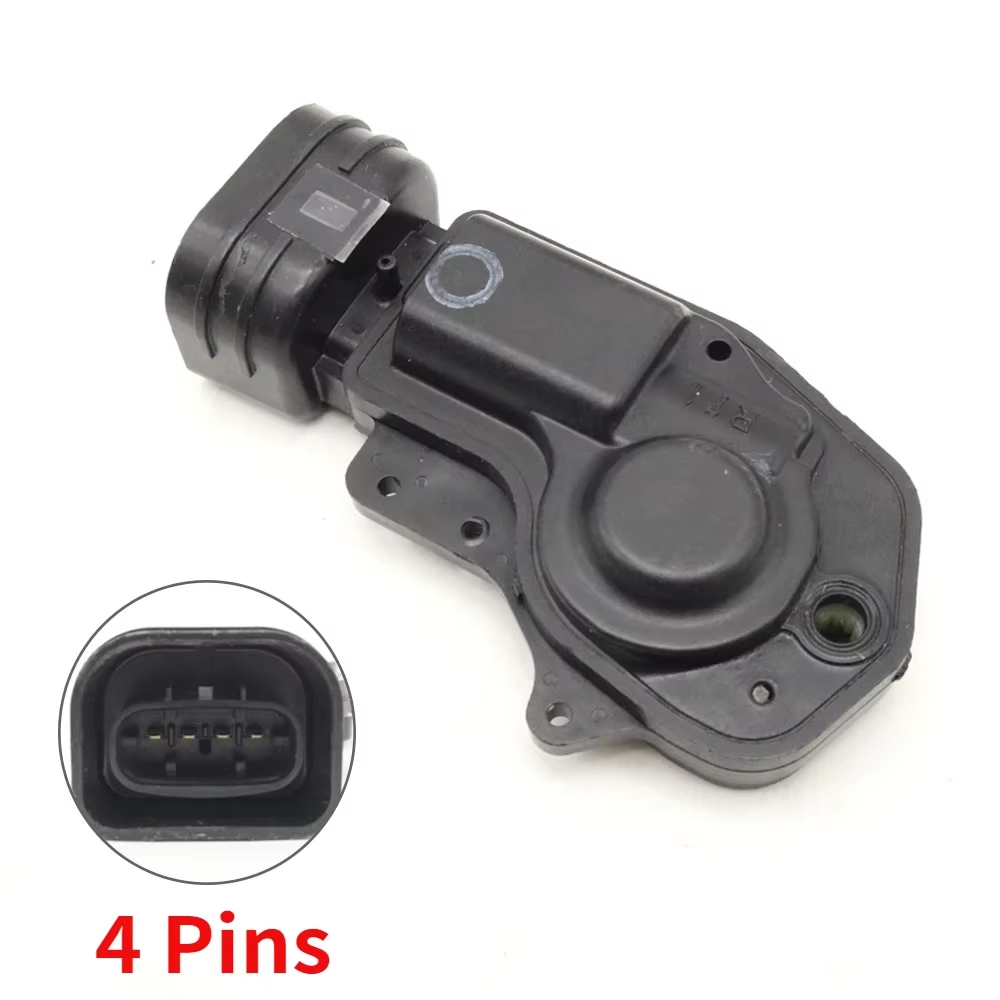
The actuator has an electrical connection, commonly using a 4-pin connector for the applicable replacement assembly.
Follow the wiring and linkage carefully so you understand how the original actuator is positioned before removing it.
Pro Tip: Take a quick photo of the actuator, linkage rods, and connector before removing anything. It gives you a useful reference when installing the replacement.
Step 4: Disconnect the Old Actuator
Disconnect the electrical connector by releasing its locking tab.
Do not pull directly on the wires.
Remove the screws, bolts, clips, or other fasteners holding the actuator in position, depending on the specific door.
Carefully disconnect the actuator from the mechanical linkage.
Needle-nose pliers can help with retaining clips, but avoid bending the rods.
Step 5: Install the New Actuator
Position the replacement actuator in the same orientation as the original.
Reconnect the mechanical linkage first and make sure the retaining clips are properly seated.
Then secure the actuator using the original mounting hardware.
Reconnect the 4-pin electrical connector until it is fully seated and locked.
The replacement is a simple plug-and-play mechanical/electrical component in the applicable setup. No key programming is required simply because you replaced the actuator.
Step 6: Test the Lock Before Reassembly
This is one of the most important steps.
Before reinstalling the door panel, reconnect the battery if necessary and test the lock.
Use:
- The key fob
- The interior door lock switch
- The manual lock mechanism
Make sure the actuator locks and unlocks smoothly.
Also check that the mechanical door handle still operates correctly.
Pro Tip: Never close the door completely until you have confirmed the lock and handle work correctly. If something is installed incorrectly, keeping the door open makes troubleshooting much easier.
Step 7: Reinstall the Door Panel
Once everything works correctly, reinstall the door panel.
Reconnect all electrical connectors.
Align the panel with the mounting clips and press it firmly into position.
Reinstall the screws and other fasteners you removed earlier.
Check that the panel sits flush against the door.
Step 8: Perform a Final Test
Close the door and test the locking system several more times.
Check all relevant functions, including:
- Remote locking
- Remote unlocking
- Interior lock switch
- Manual locking
- Door handle operation
Listen for unusual grinding or clicking noises.
If the actuator operates smoothly and the door locks and unlocks normally, the repair is complete.
Compatible Models and Years
The replacement actuators discussed in this guide may be applicable to the following vehicles:
- Toyota Land Cruiser 100 (LC100): 1998–2007
- Toyota Land Cruiser 4500 / 4700: 1998–2007
- Toyota Land Cruiser Prado LC90 / LC95: 1996–2002
- Lexus LX470: 1998–2007
Compatibility can vary by door position, market, trim level, and production year.
Always verify the vehicle information and replacement part specifications before ordering.
Common Mistakes to Avoid
- Not Confirming the Exact Model and Year
- Ignoring Left vs. Right Part Numbers
- Forcing the Electrical Connector
- Not Testing Before Reinstalling the Door Panel
Do not assume that every LC100 or LX470 uses exactly the same actuator.
Check your vehicle’s year, model, door position, and existing part before ordering.
Door position matters.
Commonly referenced part numbers may include:
- 69040-60070
- 69040-60130
- 69320-60140
These numbers are provided as reference points only. Always verify the correct part number for your exact vehicle and door before purchasing.
The connector should engage smoothly.
If it does not fit, stop and check its orientation and compatibility. Never force the connector because damaged pins or terminals can create another electrical problem.
This is one of the easiest mistakes to avoid.
Always test the actuator, lock, and door handle before putting the entire door panel back together.
Product Recommendations
If you are repairing an older Land Cruiser 100 or LX470, having the right parts and tools ready can make the job much easier.
Door Lock Actuator – Full Set of 4
[PRODUCT LINK] Door Lock Actuator – Full Set of 4 (Front Left, Front Right, Rear Left, Rear Right)
A four-piece set can be a practical choice for a high-mileage vehicle when multiple original actuators are approaching the end of their service life.
Trim Removal Tool Set
[PRODUCT LINK] Trim Removal Tool Set
A proper trim tool helps reduce the chance of damaging the plastic door clips or surrounding trim.
Door Panel Clip Assortment
[PRODUCT LINK] Door Panel Clip Assortment
Having replacement clips available is useful because old plastic clips can become brittle after nearly two decades of heat cycles and repeated removal.
Frequently Asked Questions
How do I know if it is the actuator or something else?
If only one door fails while the other doors continue to lock and unlock normally, the actuator is a strong suspect.
However, a failed fuse, broken wire, damaged connector, mechanical linkage problem, or control-system issue can cause similar symptoms.
If several doors stop working simultaneously, investigate the electrical and central locking system before replacing multiple actuators.
Can I just replace one door instead of all four?
Yes.
You do not have to replace all four actuators if only one has failed.
However, on a vehicle that is already 18–27 years old, replacing a complete four-piece set can make financial sense if several actuators are showing signs of wear.
Do I need to program anything after installation?
Normally, no.
The actuator is a mechanical/electrical component that receives the locking signal from the vehicle.
Replacing the actuator itself is not the same as programming a key or remote.
For the applicable replacement, the electrical connection is a simple 4-pin plug-and-play connection, so there is normally no key programming procedure associated with the actuator replacement.
What does ISO9001 certification mean for reliability?
ISO9001 refers to a manufacturer’s quality management system.
It indicates that the company has established processes for quality management and production control.
However, ISO9001 certification should not be interpreted as a guarantee that an individual actuator will have a specific lifespan. Product design, materials, manufacturing quality, installation, and operating conditions still matter.
Will this fit my exact model year?
You need to verify this before ordering.
The Land Cruiser 100, Land Cruiser 4500/4700, Prado LC90/LC95, and Lexus LX470 have overlapping applications, but the correct actuator can depend on the model, production year, door position, and market.
Check the vehicle fitment information and compare the original actuator or part number whenever possible.
Final Thoughts
Toyota Land Cruiser 100 and Lexus LX470 door lock actuator replacement is a manageable DIY repair for many owners, especially when a single door has stopped responding while the rest of the central locking system still works. Because these vehicles are now 18–27 years old, multiple actuator failures around the same time are common, and replacing a complete four-piece set can save substantial money compared with paying dealership labor rates.
If your door locks are becoming slow, noisy, intermittent, or completely unresponsive, verify the correct actuator for your vehicle and consider tackling the repair yourself—you could save hundreds of dollars per door.